The 15th Annual Lundberg Institute Lecture: Cancer Commons
The Lundberg Institute marks the 15th anniversary of the California nonprofit Cancer Commons by dedicating its 15th annual lecture at Commonwealth Club World Affairs to a discussion of the unique approach Cancer Commons takes to helping cancer patients.
Since its founding, Cancer Commons has delivered personalized, evidence-based guidance at no charge to more than 10,000 patients and caregivers, supported entirely by philanthropy. They provide patients and their care teams with the actionable information and data needed to make informed decisions, and help identify and access an individualized regimen of therapies that specifically target the molecular drivers of their disease. Cancer Commons also refers patients to a myriad of precision oncology services to help them navigate the cancer maze and minimize trial and error.
As Cancer Commons helps patients in this way—identifying and accessing novel tests, treatments, and trials—we learn continuously from each patient’s experience.
And then share that knowledge with the world.
ORGANIZER
George Hammond
This program has 2 types of tickets available: in-person and online-only. Please pre-register to receive a link to the live-stream event.
If you have symptoms of illness (coughing, fever, etc.), we ask that you either stay home or wear a mask. Our front desk has complimentary masks for members and guests who would like one.
The Commonwealth Club of California is a nonprofit public forum; we welcome donations made during registration to support the production of our programming.
A Humanities Member-led Forum program
Forums at the Club are organized and run by volunteer programmers who are members of The Commonwealth Club, and they cover a diverse range of topics. Learn more about our Forums.

Speakers from Cancer Commons TBA
Introduction by George Lundberg
M.D., Editor in Chief, Cancer Commons; Editor at Large, Medscape; Executive Adviser, Cureus; Clinical Professor of Pathology, Northwestern University; President and Chair, The Lundberg Institute
Commonwealth Club World Affairs is a public forum. Any views expressed in our programs are those of the speakers and not of Commonwealth Club World Affairs.





 Dr Kizer is a graduate of both Stanford and UCLA. He is board certified in 6 medical specialties and subspecialties, author of >500 articles, books, and chapters. Best known for having systematically transformed the Veterans Healthcare System in the 1990s when serving as the Undersecretary for Health, Dr Kizer’s career achievements in patient safety, quality of care, and population health are staggering in creativity, scope, and impact. Fields as disparate as emergency medical services, tobacco control, HIV/AIDS, and managed care have been shaped by his pioneering efforts in California and the nation. For much of his professional life, his home base has been Sacramento and his academic home, U C Davis.
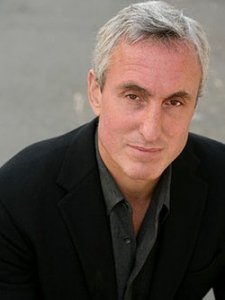 Gary Taubes, Author of best selling books Good Calories; Bad Calories (2007) and Why We Get Fat (2010) brings the audience up to date from his best selling 2016 The Case Against Sugar.
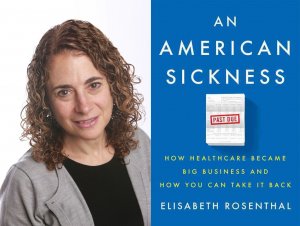 An American Sickness: How Healthcare Became Big Business and How You Can Take it Back,” the talk will look at just that. Everyone knows that the U.S. health system is by far the most expensive in the world, with spending/prices for drugs, procedures and hospitalizations that are many times those in other developed countries. And for all that, we don’t generally get better care or better results. I’ll look at the evolution of the U.S. health system over the last 3 decades and how it moved from a caring endeavor to a financially driven system where profit rather than patient good was the prime motivation. I’ll trace how commercial forces and interests were allowed to insinuate themselves into medical practice, step-by-step, so no one protested much…or even noticed…until the prices got sky high. We now live in a system where medical machinery comes with brochures on how to recoup return-on-investment and ambulance companies as well as dialysis units are owned by venture capital firms. But the ultimate message is one of optimism and hope. Once patients-voters-consumers understand how the system functions and how our healthcare has been hijacked for profit, the book offers many ways to push back, to begin untangling the mess we’re in. I discuss some of those, from strategies to protect your wallet when you enter the hospital or doctor’s office to reforms that should be voter issues at the state and national level. I believe that if patients and physicians stand up for medicine we will get better, cheaper care. The books ends: “Given the false choice between your money or your life, it’s time to take a stand for the latter.